Buckle up!  Our latest L2 demo day will knock your socks off with a path to 1 Ggas/sec, a new frontier security layer on top of Rollup Boost, and improved OperatorEx & DevEx!
1 Like
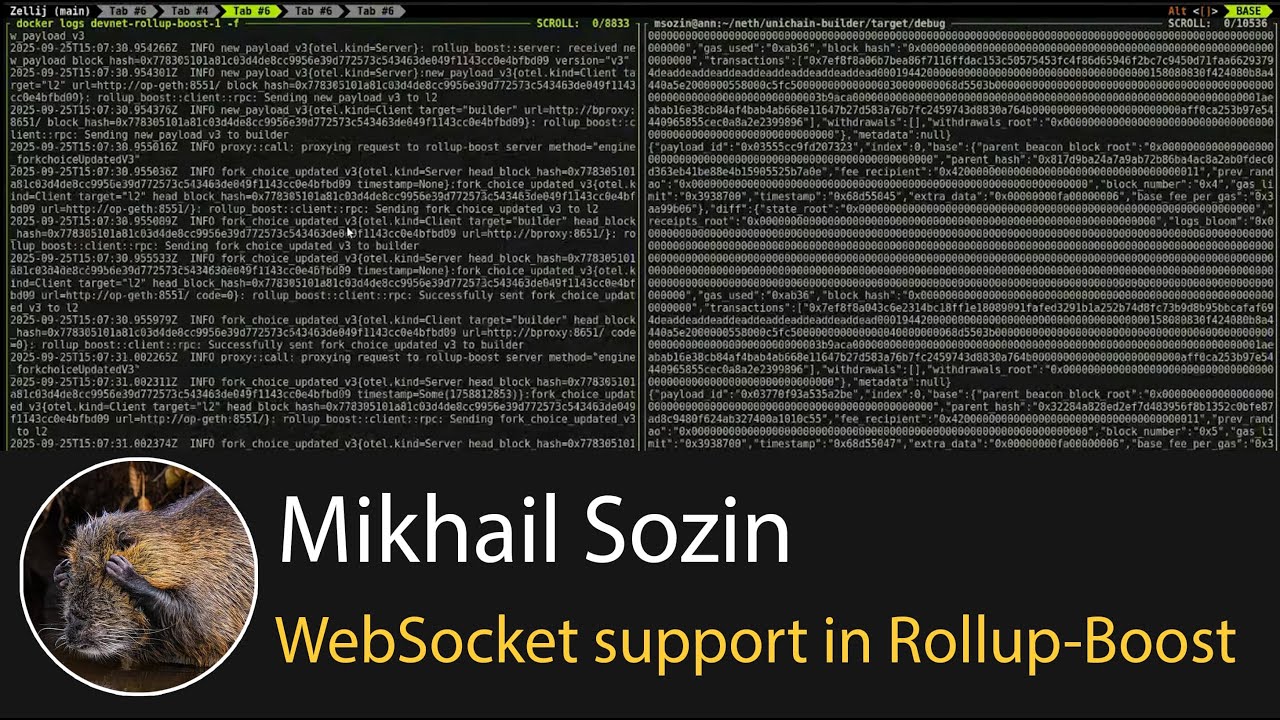
In this demo, I walk through the new WebSocket support added to Rollup-Boost using Builder Playground and op-rbuilder. This feature simplifies migration for chain operators by replacing the previous HTTP proxying approach with a RPC client.
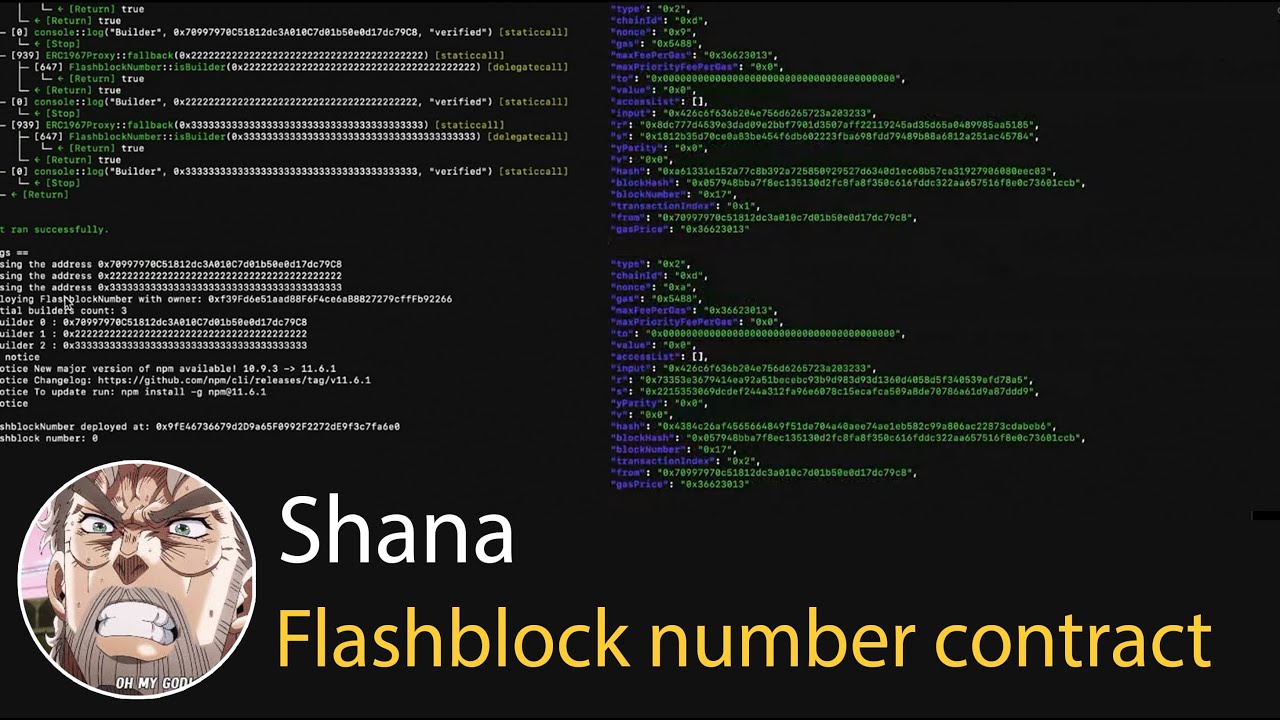
This week I’m showing how the Flashblock number contract works by incrementing a counter on every Flashblock. By attaching a builder transaction to the top of each Flashblock, we can identify when Flashblocks begin, track missed Flashblocks, and enable onchain searchers to fill MEV orders relative to the Flashblock number.
The walkthrough covers running a builder with and without the contract, and inspecting how builder transactions evolve once it is enabled.
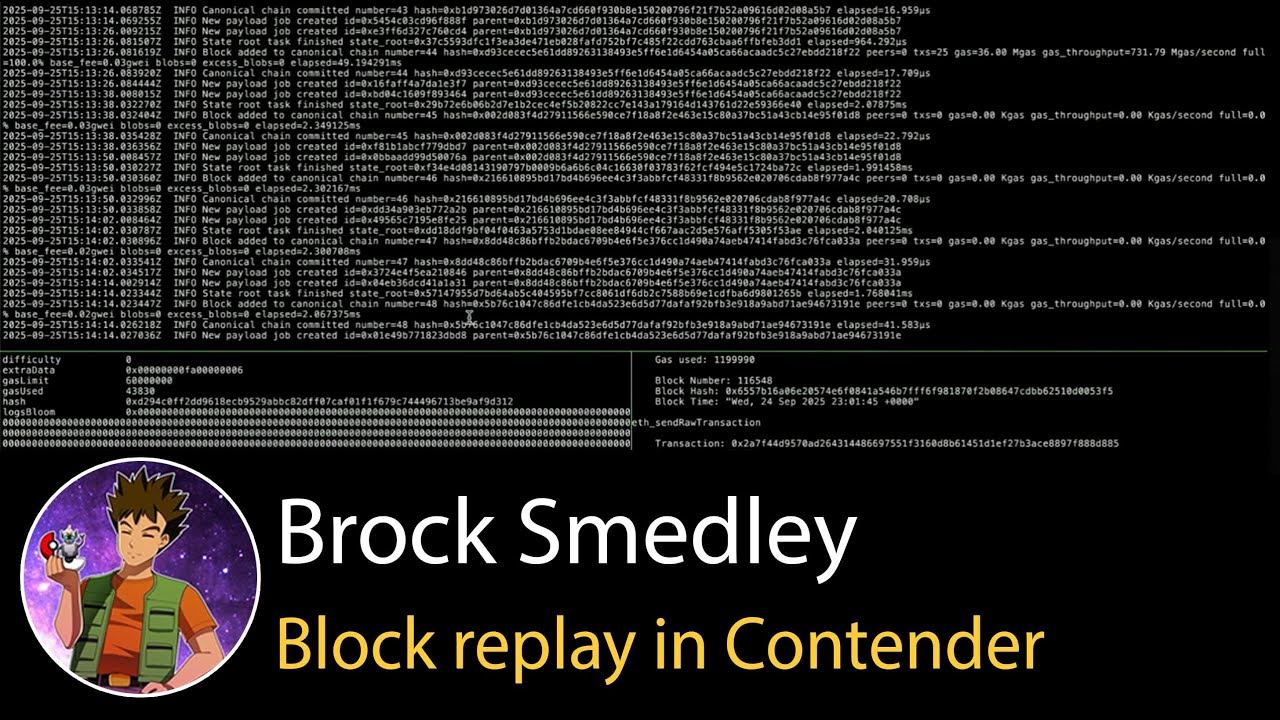
In this demo, I showcase Contender’s new block replay feature. Using Builder Playground with an L1 setup, the tool replays a specified range of blocks against an authenticated engine API and measures execution speed.
By logging fork choice updates and transaction throughput across blocks, this feature provides a straightforward way to benchmark how efficiently any running node processes transactions.
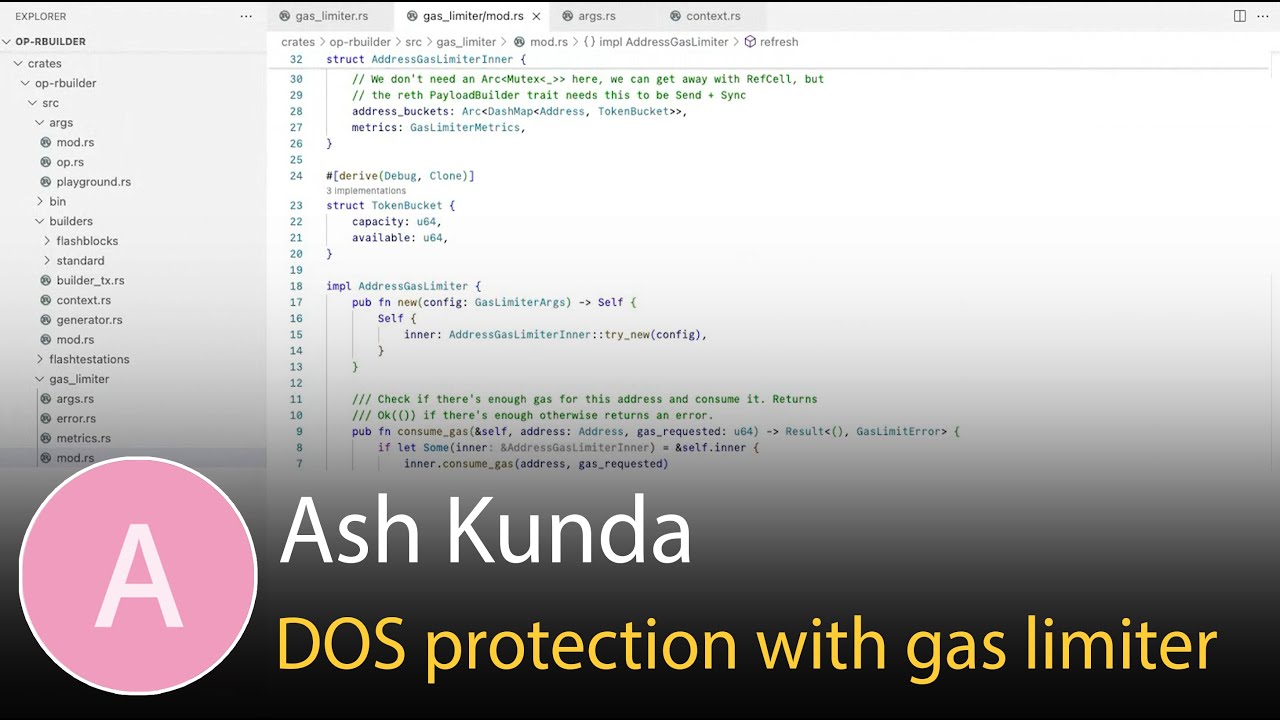
For this demo day I present a new Gas Limiter feature in op-rbuilder as a DoS protection mechanism designed to help operators sleep better at night.
The limiter uses a token bucket algorithm to allocate each sender a capped gas budget that refills at a fixed rate per block. Transactions consume from this budget regardless of success or reversion, ensuring malicious bursts are constrained.
This approach raises the cost of spam, safeguards builder throughput, and provides stronger guarantees for stable block production. It DOES NOT stop all spam, nor does it even try to achieve that goal.
Here I introduce The Credible Layer, a network extension built on Rollup-Boost that enables developers to define and enforce application-specific invariants at the block builder level.
These invariants are written in Solidity but executed off-chain, providing higher performance and functionality beyond what onchain execution allows.
I show how assertions can be registered, indexed, and enforced by the builder, including a live example where an ownable contract vulnerability is neutralized by an off-chain assertion that blocks unauthorized ownership transfers. This system scales horizontally by executing read-only assertions in parallel, effectively offering a novel path toward both safety and scalability without modifying core protocol architecture.
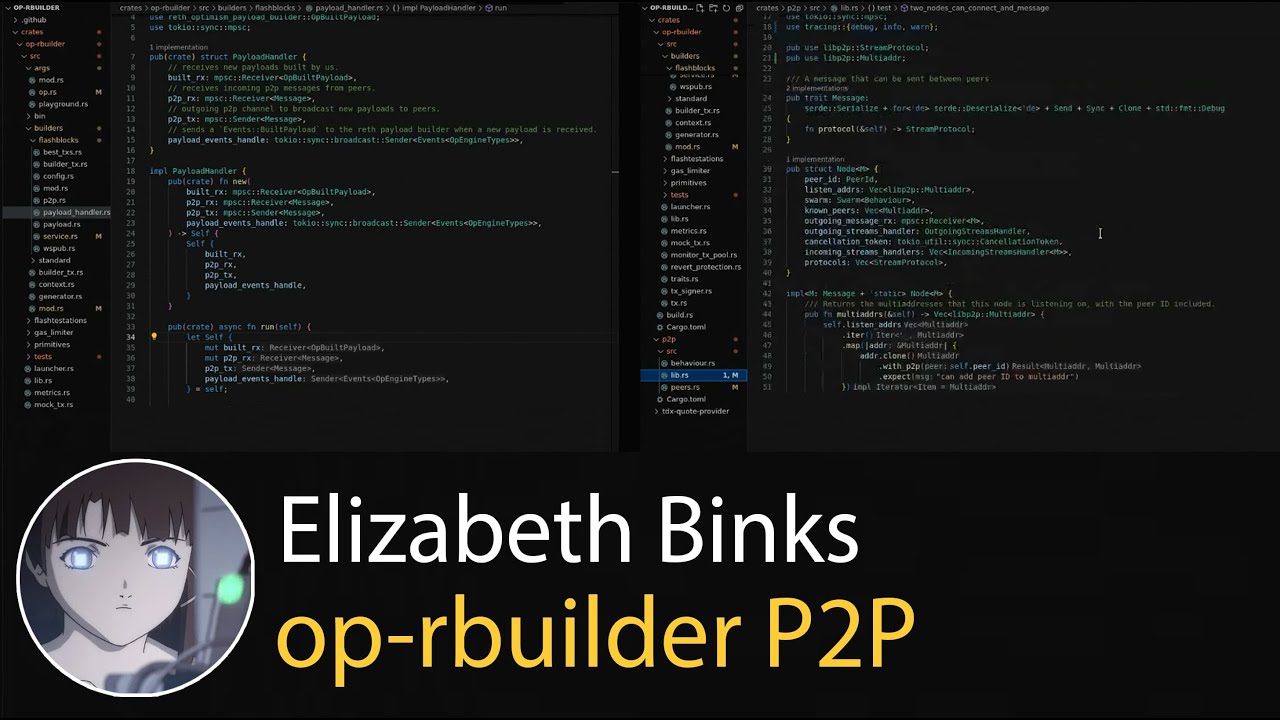
I’ll walk through my work on adding a libp2p-based networking layer to op-rbuilder to enable Flashblock propagation across multiple builders.
The motivation is to improve availability, if one builder goes down mid-block, another can continue building Flashblocks so block production isn’t interrupted.
The current prototype uses direct peer connections to broadcast and sync Flashblocks between builders, with a simple stream protocol for exchanging build payloads. This setup lays the groundwork for more resilient builder coordination and future extensibility beyond a single builder.
I’ll discuss the current scaling challenges of running Base at 75Mgas/sec and the path toward 1Ggas/sec.
While sequencer performance is well-optimized, validator nodes and RPC providers struggle to stay at tip as gas limits increase. I introduce the idea of extending Flashblocks with Block-Level Access Lists, sharing per-block account and storage access metadata so validators can prefetch state and parallelize execution.
I also cover concerns around metadata size, bandwidth limits, and dependencies on WebSocket infra, and outline possible fallback mechanisms via P2P Flashblock streams.