# Evolution of AI Systems: From Web2 to Web3
**URL:** https://collective.flashbots.net/t/evolution-of-ai-systems-from-web2-to-web3/4695
**Category:** Research
**Tags:** article, writings, ai
**Created:** [February 16, 2025, 1:01pm UTC](https://collective.flashbots.net/t/evolution-of-ai-systems-from-web2-to-web3/4695 "2025-02-16T13:01:36Z")
**Posts on this page:** 3
**Page:** 1
### Author:  [@tesa](https://collective.flashbots.net/u/tesa)
#### Post date: [February 16, 2025, 1:01pm UTC](https://collective.flashbots.net/t/evolution-of-ai-systems-from-web2-to-web3/4695/1 "2025-02-16T13:01:36Z")
In our previous post, we explored the [History of Application Design](https://collective.flashbots.net/t/history-of-application-design/4619). In Part 1 of our second Agentic AI series post, we examine the current Web2 AI landscape and its key trends, platforms, and technologies. In Part 2, we explore how blockchain and trustless verification enable the evolution of AI agents into truly agentic systems.
Part I. Evolution of AI Systems: From Web2 to Web3
1. Web2 AI Agent Landscape
2. Limitations of Centralized AI
3. Decentralized AI Solutions
4. Web3 AI Agent Landscape
## 1. Web2 AI Agent Landscape
### Current State of Centralized AI Agents
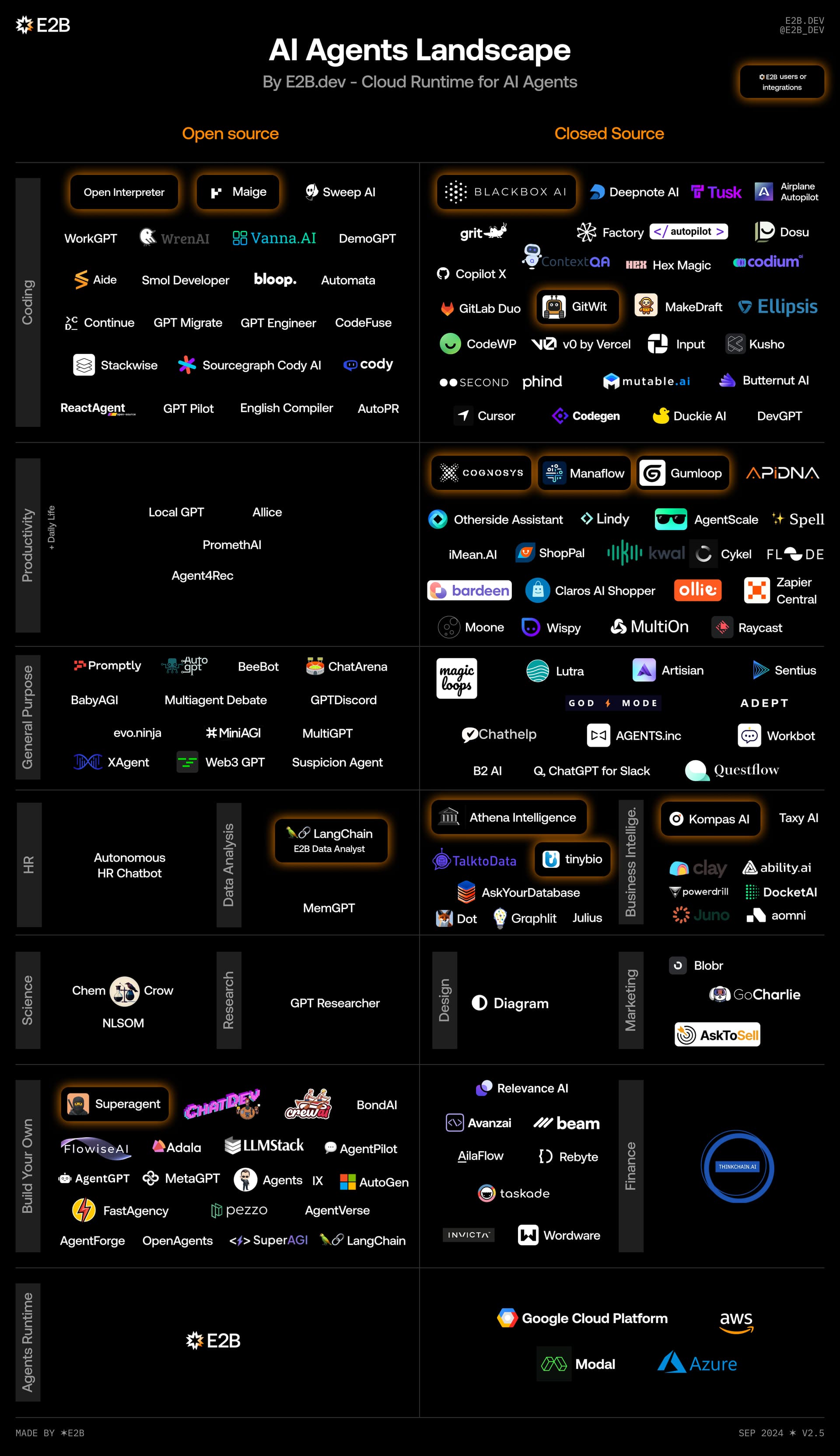
Figure 1. [E2B Web2 AI Agent Landscape.](https://e2b.dev/blog/ai-agents-in-the-wild)
The contemporary AI landscape is predominantly characterized by centralized platforms and services controlled by major technology companies. Companies like OpenAI, Anthropic, Google, and Microsoft provide large language models (LLMs) and maintain crucial cloud infrastructure and API services that power most AI agents.
### **AI Agent Infrastructure**
Recent advancements in AI infrastructure have fundamentally transformed how developers create AI agents. Instead of coding specific interactions, developers can now use natural language to define agent behaviors and goals, leading to more adaptable and sophisticated systems.
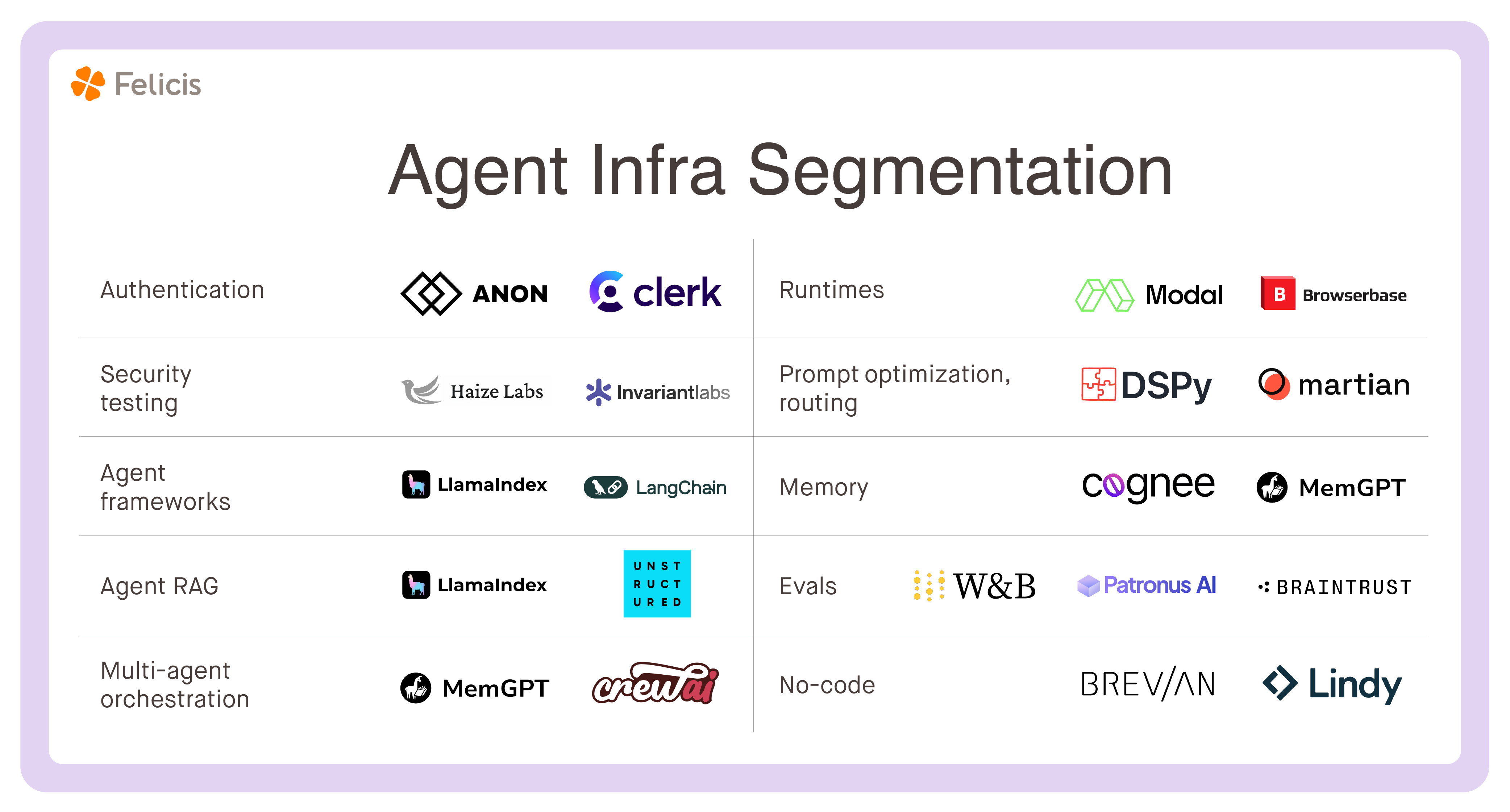
Figure 2. [AI Agent Infrastructure Segmentation.](https://www.felicis.com/insight/the-agentic-web)
Key advancements in the following areas have led to a proliferation in AI agents:
- **Advanced Large Language Models (LLMs):** LLMs have revolutionized how agents understand and generate natural language, replacing rigid rule-based systems with more sophisticated comprehension capabilities. They enable advanced reasoning and planning through “chain-of-thought” reasoning.
- **Agent Frameworks** : Several frameworks and tools are emerging to facilitate the creation of multi-agent AI applications for businesses. These frameworks support various LLMs and provide pre-packaged features for agent development, including memory management, custom tools, and external data integration. These frameworks significantly reduce engineering challenges, accelerating growth and innovation.
- **Agentic AI Platforms** : Agentic AI platforms focus on orchestrating multiple AI agents in a distributed environment to solve complex problems autonomously. These systems can adapt dynamically and collaborate, allowing for robust scaling solutions. These services aim to transform how businesses utilize AI by making agent technology accessible and directly applicable to existing systems.
- **Retrieval Augmented Generation (RAG)**: Retrieval Augmented Generation (RAG) allows LLMs to access external databases or documents before responding to queries, enhancing accuracy and reducing hallucinations. RAG advancements enable agents to adapt and learn from new information sources and avoid the need to retrain models.
- **Memory Systems** : To overcome the limitation of traditional AI agents in handling long-term tasks, memory services provide short-term memory for intermediate tasks or long-term memory to store and retrieve information for extended tasks.
- **No-code AI Platforms** : No-code platforms enable users to build AI models through drag-and-drop tools and visual interfaces or a question-and-answer wizard. Users can deploy agents directly to their applications and automate workflows. By simplifying the AI agent workflow, anyone can build and use AI, resulting in greater accessibility, faster development cycles, and increased innovation.
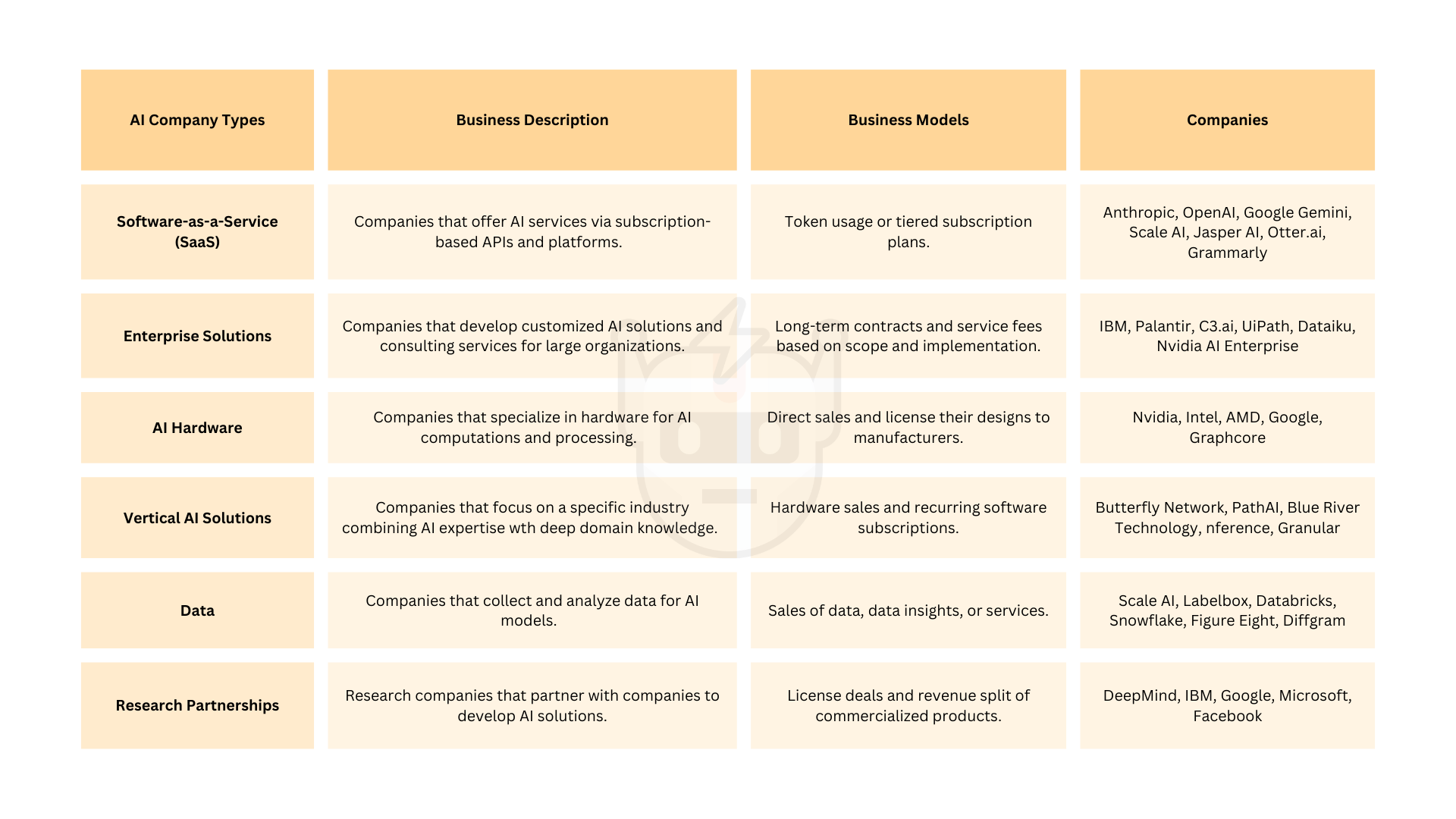
Figure 3. AI Business Models.
### **Business Models**
Traditional Web2 AI companies primarily employ tiered subscriptions and consulting services as their business models.
Emerging business models for AI agents include:
- **Subscription / Usage-Based**. Users are charged based on the number of agent runs or the computational resources utilized, similar to Large Language Model (LLM) services.
- **Marketplace Models**. Agent platforms take a percentage of the transactions made on the platform, similar to app store models.
- **Enterprise Licensing**. Customized agent solutions with implementation and support fees.
- **API Access**. Agent platforms provide APIs that allow developers to integrate agents into their applications, with charges based on API calls or usage volume.
- **Open-Source with Premium Features**. Open-source projects offer a basic model for free but charge for advanced features, hosting, or enterprise support.
- **Tool Integration**. Agent platforms may take a commission from tool providers for API usage or services.
## 2. Limitations of Centralized AI
While current Web2 AI systems have ushered in a new era of technology and efficiency, they face several challenges.
- **Centralized Control** : The concentration of AI models and training data in the hands of a few large technology companies creates risks of restricted access, controlled model training, and enforced vertical integrations.
- **Data Privacy and Ownership** : Users lack control over how their data is used and receive no compensation for its use in training AI systems. Centralization of data also creates a single point of failure and can be a target for data breaches.
- **Transparency Issues** : The “black box” nature of centralized models prevents users from understanding how decisions are made or verifying the training data sources. Applications built on these models cannot explain potential biases, and users have little to no control over how their data is used.
- **Regulatory Challenges** : The complex global regulatory landscape concerning AI use and data privacy creates uncertainty and compliance challenges. Agents and applications built on centralized AI models may be subject to regulations from the model owner’s country.
- **Adversarial Attacks** : AI models can be susceptible to adversarial attacks, where inputs are modified to deceive the model into producing incorrect outputs. Verification of input and output validity is required, along with AI agent security and monitoring.
- **Output Reliability** : AI model outputs require technical verification and a transparent, auditable process to establish trustworthiness. As AI agents scale, the correctness of AI model outputs becomes crucial.
- **Deep Fakes** : AI-modified images, speech, and videos, known as “Deep Fakes,” pose significant challenges as they can spread misinformation, create security threats, and erode public trust.
## 3. Decentralized AI Solutions
The main constraints of Web2 AI—centralization, data ownership, and transparency—are being addressed with blockchain and tokenization. Web3 offers the following solutions:
- **Decentralized Computing Networks**. Instead of using centralized cloud providers, AI models can utilize distributed computing networks for training and running inference.
- **Modular Infrastructure.** Smaller teams can leverage decentralized computing networks and data DAOs to train new, specific models. Builders can augment their agents with modular tooling and other composable primitives.
- **Transparent and Verifiable Systems.** Web3 can offer a verifiable way to track model development and usage with blockchain. Model inputs and outputs can be verified via zero-knowledge proofs (ZKPs) and trusted execution environments (TEEs) and permanently recorded on-chain.
- **Data Ownership and Sovereignty.** Data can be monetized via marketplaces or data DAOs, which treat data as a collective asset and can redistribute profits from data usage to DAO contributors.
- **Network Bootstrapping**. \*\*\*\*Token incentives can help bootstrap networks by rewarding early contributors for decentralized computing, data DAOs, and agent marketplaces. Tokens can create immediate economic incentives that help overcome the initial coordination problems that impede network adoption.
## 4. Web3 AI Agent Landscape
Both Web2 and Web3 AI agent stacks share core components like model and resource coordination, tools and other services, and memory systems for context retention. However, Web3ʻs incorporation of blockchain technologies allows for the decentralization of compute resources, tokens to incentivize data sharing and user ownership, trustless execution via smart contracts, and bootstrapped coordination networks.
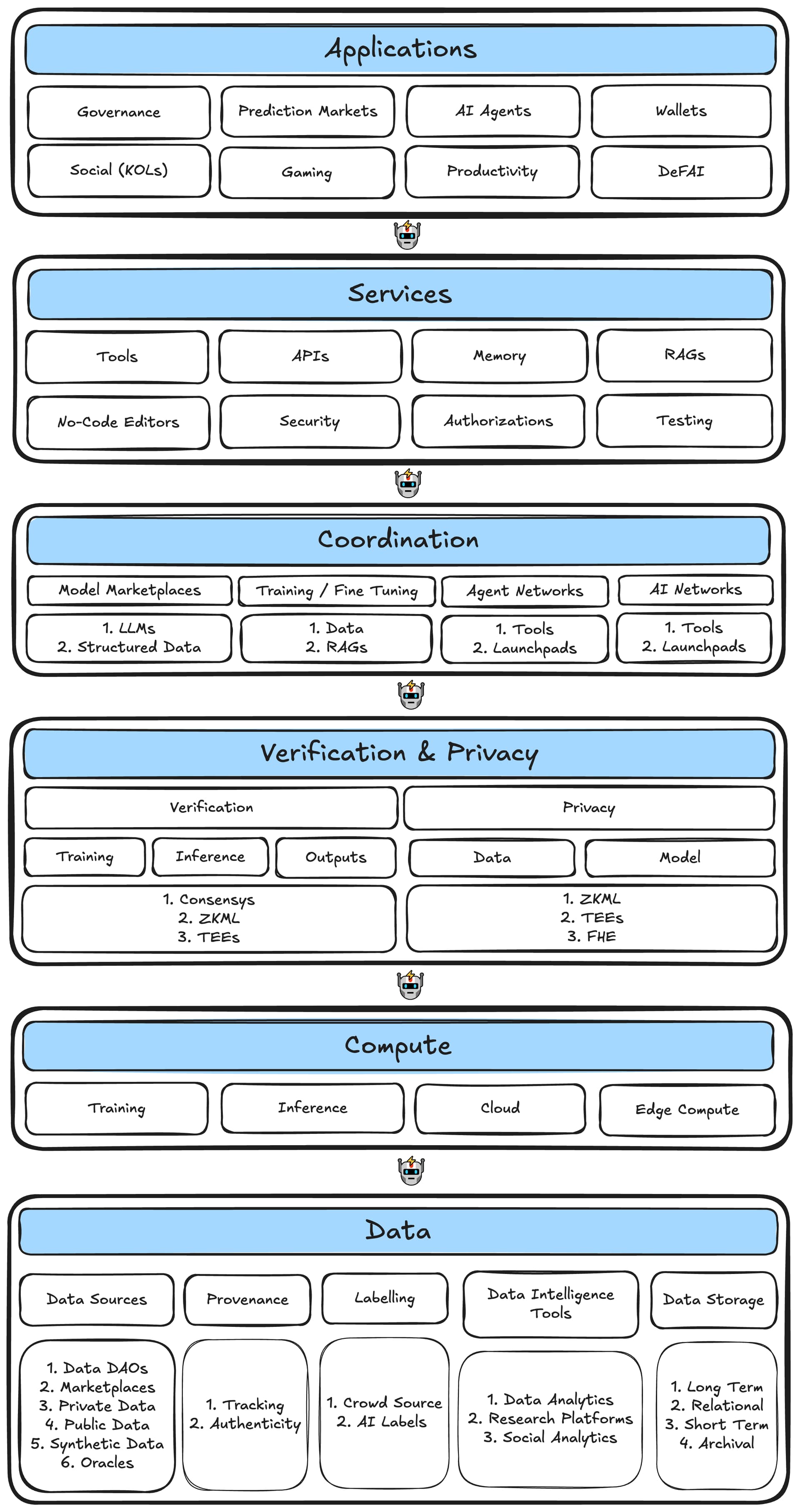
Figure 4. Web3 AI Agent Stack.
### **Data**
The Data layer is the foundation of the Web3 AI agent stack and encompasses all aspects of data. It includes data sources, provenance tracking and authenticity verification, labeling systems, data intelligence tools for analytics and research, and storage solutions for different data retention needs.
1. **Data Sources.** Data Sources represent the various origins of data in the ecosystem.
2. **Provenance**. Data provenance is crucial for ensuring data integrity, bias mitigation, and reproducibility in AI. Data provenance tracks the data’s origin and records its lineage.
3. **Labeling**. Data labeling has traditionally required humans to tag or label data in for supervised learning models. Token incentives can help crowdsource workers for data preprocessing.
4. **Data Intelligence Tools.** Data Intelligence Tools are software solutions that analyze and extract insights from data. They improve data quality, ensure compliance and security, and boost AI model performance by improving data quality.
5. **Data Storage**. Token incentives allow for decentralized, distributed data storage across independent node networks. Data is typically encrypted and shared across multiple nodes to maintain redundancy and privacy.
### **Compute**
The Compute layer provides the processing infrastructure needed to run AI operations. Computing resources can be divided into distance categories: training infrastructure for model development, inference systems for model execution and agent operations, and edge computing for local decentralized processing.
Distributed computing resources remove the reliance on centralized cloud networks and enhance security, reduce the single point of failure issue, and allow smaller AI companies to leverage excess computing resources.
1. **Training**. Training AI models are computationally expensive and intensive. Decentralized training compute democratizes AI development while increasing privacy and security as sensitive data can be processed locally without centralized control.
2. **Inference**. Inference computing refers to the resources needed by models to generate a new output or by AI applications and agents to operate. Real-time applications that process large volumes of data or agents that require multiple operations use a larger amounts of inference computing power.
3. **Edge Compute**. Edge computing involves processing data locally on remote devices like smartphones, IoT devices, or local servers. Edge computing allows for real-time data processing and reduced latency since the model and the data run locally on the same machine.
### Verification / Privacy
The Verification and Privacy layer ensures system integrity and data protection. Consensus mechanisms, Zero-Knowledge Proofs (ZKPs), and TEEs are used to verify model training, inference, and outputs. FHE and TEEs are used to ensure data privacy.
1. **Verifiable Compute**. Verifiable compute includes model training and inference.
2. **Output Proofs**. Output proofs verify that the AI model outputs are genuine and have not been tampered with without revealing the model parameters. Output proofs also offer provenance and are important for trusting AI agent decisions.
3. **Data and Model Privacy**. FHE and other cryptographic techniques allow models to process encrypted data without exposing sensitive information. Data privacy is necessary when handling personal and sensitive information and to preserve anonymity.
### Coordination
The Coordination layer facilitates interaction between different components of the Web3 AI ecosystem. It includes model marketplaces for distribution, training and fine-tuning infrastructure, and agent networks for inter-agent communication and collaboration.
1. **Model Networks**. Model networks are designed to share resources for AI model development.
2. **Training / Fine Tuning**. Training networks specialize in distributing and managing training datasets. Fine-tuning networks are focused on infrastructure solutions to enhance model external knowledge through RAGs (Retrieval Augmented Generation) and APIs.
3. **Agent Networks**. Agent Networks provide two main services for AI agents: 1) tools and 2) agent launchpads. Tools include connections with other protocols, standardized user interfaces, and communication with external services. Agent launchpads allow for easy AI agent deployment and management.
### Services
The Services layer provides the essential middleware and tooling that AI applications and agents need to function effectively. This layer includes development tools, APIs for external data and application integration, memory systems for agent context retention, Retrieval-Augmented Generation (RAG) for enhanced knowledge access, and testing infrastructure.
- **Tools.** A suite of utilities or applications that facilitate various functionalities within AI agents:
- **Application Programming Interfaces (APIs)**. APIs facilitate the seamless integration of external data and services into AI agents. Data access APIs provide agents with access to real-time data from external sources, enhancing their decision-making capabilities. Service APIs allow agents to interact with external applications and services expanding their functionality and reach.
- Retrieval-Augmented Generation (RAG) Augmentation. RAG augmentation enhances agentsʻ knowledge access by combining LLMs with external data retrieval.
- **Memory**. AI agents require a memory system to retain context and to learn from their interactions. With context retention, agents maintain a history of interactions to provide coherent and contextually appropriate responses. Longer memory storage allows agents to store and analyze past interactions which can improve their performance and personalize user experiences over time.
- **Testing Infrastructure**. Platforms that are designed to ensure the reliability and robustness of AI agents. Agents can run in controlled simulation environments to evaluate performance under various scenarios. Testing platforms allow for performance monitoring and continuous assessment of agentsʻ operations to identify any problems.
### Applications
The Application layer sits at the top of the AI stack and represents the end-user-facing solutions. This includes agents that solve use cases like wallet management, security, productivity, gaining, prediction markets, governance systems, and DeFAI tools.
- **Wallets**. AI agents enhance Web3 wallets by interpreting user intents and automating complex transactions, thereby improving user experience.
- **Security**. AI agents monitor blockchain activity to identify fraudulent behavior and suspicious smart contract transactions.
- **Productivity**. AI agents assist in automating tasks, managing schedules, and providing intelligent recommendations to boost user efficiency.
- **Gaming**. AI agents operate non-player characters (NPCs) that adapt to player actions in real-time, enhancing user experience. They can also generate in-game content and assist new players in learning the game.
- **Prediction**. AI agents analyze data to provide insights and facilitate informed decision-making for prediction platforms.
- **Governance**. AI agents facilitate decentralized autonomous organization (DAO) governance by automating proposal evaluations, conducting community temperature checks, ensuring Sybil-free voting, and implementing policies.
- **DeFAI Agents**. Agents can swap tokens, identify yield-generating strategies, execute trading strategies, and manage cross-chain rebalancing. Risk manager agents monitor on-chain activity to detect suspicious behavior and withdraw liquidity if necessary.
Collectively, these applications contribute to secure, transparent, and decentralized AI ecosystems tailored to Web3 needs.
## Conclusion
The evolution from Web2 to Web3 AI systems represents a fundamental shift in how we approach artificial intelligence development and deployment. While Web2’s centralized AI infrastructure has driven tremendous innovation, it faces significant challenges around data privacy, transparency, and centralized control. The Web3 AI stack demonstrates how decentralized systems can address these limitations through data DAOs, decentralized computing networks, and trustless verification systems. Perhaps most importantly, token incentives are creating new coordination mechanisms that can help bootstrap and sustain these decentralized networks.
Looking ahead, the rise of AI agents represents the next frontier in this evolution. As we’ll explore in the next article, AI agents – from simple task-specific bots to complex autonomous systems – are becoming increasingly sophisticated and capable. The integration of these agents with Web3 infrastructure, combined with careful consideration of technical architecture, economic incentives, and governance structures, has the potential to create more equitable, transparent, and efficient systems than what was possible in the Web2 era. Understanding how these agents work, their different levels of complexity, and the distinction between AI agents and truly agentic AI will be crucial for anyone working at the intersection of AI and Web3.
### Resources
1. Amos G. [Best 5 Frameworks to Build Multi-Agent AI Applications](https://getstream.io/blog/multiagent-ai-frameworks/). November 25, 2024.
2. Lekha Priya. [Top 5 Agentic AI Frameworks to Watch in 2025](https://lekha-bhan88.medium.com/top-5-agentic-ai-frameworks-to-watch-in-2025-9d51b2b652c0). January 9, 2025.
3. LangChain. [State of AI Agents](https://www.langchain.com/stateofaiagents). 2024.
4. Roi Lipman. [AI Agents: Memory Systems and Graph Database Integration](https://www.falkordb.com/blog/ai-agents-memory-systems/). November 6, 2024.
5. James Detweiler and Eric Flaningam. [The Agentic Web](https://www.felicis.com/insight/the-agentic-web). August 14, 2024.
6. Wojciech Filipek. [Top No-Code AI Tools of 2025: In-Depth Guide](https://buildfire.com/no-code-ai-tools/). December 31, 2024.
7. Skanda Vivek. [The Economics of Large Language Models](https://medium.com/emalpha/the-economics-of-large-language-models-2671985b621c). August 9, 2023.
8. Teng Yan, Chain of Thought. [The Ultimate Crypto AI Primer](https://www.chainofthought.xyz/p/ultimate-crypto-x-ai-primer). July 18, 2024.
9. Jonathan King, Coinbase Ventures. [Demystifying the Crypto x AI Stack](https://paragraph.xyz/@cbventures/demystifying-the-crypto-x-ai-stack). October 24, 2024
10. 0xJeff. [My Data is not Mine. The Emergence of Data Layers.](https://x.com/Defi0xJeff/status/1884644127352193099)
11. Madhavan Malolan, Reclaim Protocol. [Proof of Provenance](https://reclaimprotocol.org/blog/posts/proof-of-provenance). December 8, 2023.
---
### Author:  [@tesa](https://collective.flashbots.net/u/tesa)
#### Post date: [March 13, 2025, 11:56pm UTC](https://collective.flashbots.net/t/evolution-of-ai-systems-from-web2-to-web3/4695/2 "2025-03-13T23:56:02Z")
Pdf version available [here](https://drive.google.com/file/d/1QcJc4-2vfTJbNmyktXw7rrk0D9NQWCCn/view?usp=sharing).
---
### Author:  [@solesprung](https://collective.flashbots.net/u/solesprung)
#### Post date: [April 2, 2025, 7:57am UTC](https://collective.flashbots.net/t/evolution-of-ai-systems-from-web2-to-web3/4695/3 "2025-04-02T07:57:24Z")
> [@tesa](#):
>
> proliferation
Rapid increase in numbers